Craft Beer is Not a Fad

In a food and beverage market in which new iterations of products vie for consumers’ attention daily, if not hourly, a certain caste of critics like to claim that craft beer is a fad, a class of drinks in fashion for the time being that will eventually—perhaps literally—fizzle out. It is these commentators who are perfectly content sticking to the American lagers of yore, cracking bottle after bottle of Budweiser, patiently waiting for consumers to return to their comfort zone of cheap, flavorless beer.

Yet, as in other industries in which a new trend took hold of the nation, the beer industry is not simply experiencing a blip that will be forgotten when things return to business as usual. Business is not going to change to usual. The craft beer craze is here to stay, and it’s only going to continue growing as big beer companies, or at least their subpar products, gradually lose the ability to quench beer drinkers’ thirst for good beer.

The Levis Theory: Craft Beer is Here for Good (and Gender Neutral)

Craft beer is the denim jeans of pants. True, beer has its en vogue styles—double and imperial IPAs, Brettanomyces-fermented “horse blanket” sours and barrel aged-to-infinity barley wines may go the way of whitewashed jeans, Capri jeans and bell bottom jeans—but just as denim came into the picture and never left, people are not going to change their minds about drinking beer that better suits their needs.  Perhaps radical at the time, denim became a staple of the American (and Western) wardrobe for men and women everywhere, and people never stopped wearing it. They’re not going to stop drinking better beer, either.

The Playstation Theory: Craft Beer is Adapting to a Changing Market

Whether a gamer, Gen X-er, parent or arguably none of the above, almost everybody knows what Nintendo is. It’s the video game company that created Mario, the Mickey Mouse of video games, the arcade game from Japan that changed the world.

However, ask any modern gamer about Nintendo today, and they’ll shrug. No longer at the forefront of video game innovation, Nintendo has fallen by the wayside while it produces game after game with the same characters, for the same media. In the meantime, other, newer, console companies have been competing for first place: X Box and Playstation.

Playstation is continually coming out with new consoles, controllers, games and stories. Playstation 1, 2, 3 and 4 have each been relevant and coveted, even with X Box and X Box Live as its competitors. Year after year, both systems create new reasons to buy their consoles, their extensions, their games and those games’ new features.

Perhaps the most important distinction between Playstation/X Box and Nintendo is the existence and availability of (free) games in a medium that’s very important to players: the Internet (and in particular, mobile devices). While other video game companies have adapted to new technologies available to game players, Nintendo has famously faltered, preventing its products from becoming available for free or on mobile devices, and as such, it has been left behind. By refusing to adapt to changing consumer demands, the video game giant has become less successful.

As craft brewers invent new ways to make beer and create more locally-focused brews, holding their audience from batch to batch, big beer companies like Bud are slowly but steadily losing market share.

The Mrs. Meyers Theory: Craft Beer Costs More Because it’s Better for You and the Environment

When I was growing up, two or three brands of cleaning products shouted out for shoppers at local supermarkets. Chemicals had to be kept out of sight and under kitchen sinks because they could kill your children. Somewhere, meanwhile, Mrs. Meyers was brewing up new recipes for soaps and household cleaners in her eco-friendly kitchen.

As more environmentally conscious brands tried their hand at products that could actually clean your house without killing you—and look and smell good while they were doing—the next generation of house-cleaning consumers emerged. Names like “Method” and “Honest” bumped their pretty bottles up against harsh names on large containers like “Clorox” and “Windex.” Mrs. Meyers moved in next to Mr. Clean.

Budweiser and Coors may not be poison – I still drink it from time to time, just like I still use bleach to scrub my tiles from time to time – bleach will still clean your tiles incredibly well, just like Budweiser will still give you a buzz. But put simply, when there are better options, wouldn’t you rather do it better?

Compared to macro beers, micro-brewed beer is better for you because its ingredients maintain their nutritional integrity. In other words, the malted barley that is used to make beer and the liquid that’s extracted from it (along with what’s extracted from fruits, herbs and other ingredients included in many microbrews) stays present in the beer that you end up drinking.

This is not the case for major “lawnmower lagers.” Big brands remove much of the nutritional content in their beers via pasteurization to ensure homogeneity prior to sale. Craft brewers not only combat this “empty calories” scenario, but even serve to benefit the bodies of the health-conscious—used as a recovery beverage after a period of physical exertion, craft beer can actually replenish runners’ or cyclists’ electrolytes, as well as rebuild much needed muscle tissue due to vitamins present. (In fact, one Dutch study performed at the TNO Nutrition and Food Research Institute found that craft beer drinkers had 30 percent higher levels of vitamin B6 in their blood than non-drinkers, and twice as much vitamin B6 as wine drinkers.)

In my own experience, I have seen a considerable difference in the benefits of micro vs. macro beers in another area related to their ingredients: consumption. For myself and many friends, it has often been the assumption and practice that light beers are made for drinking in large quantities. Thanks to their being cheap, watered-down and easy to “chug,” they are ubiquitously present on college campuses to drink during activities that encourage binge drinking. If only for the sheer volume of bad beer drinking habits (beer pong, anyone?), experiences I’ve had and witnessed among the likes of Coors and Natural Light are not ones I would deign to repeat.

Craft beer, on the other hand, is meant to be savored. Even over a period of several hours, two companions might share two or four beers, as opposed to the dozen or more that could be crushed between the same people in the same amount of time otherwise. Studies have proven the benefits of moderate consumption of beer, qualifying the beverage as part of a healthy diet that can promote well-being, decrease risk of Alzheimer’s, achieve cancer-fighting antioxidants and contribute to LDL or “good cholesterol” which prevents heart disease. (Even further, a 2009 Tufts University study revealed that elderly test subjects who consumed a moderate amount of beer every day achieved higher bone density than those who abstained.)

Consumers’ tendency toward fewer, better, more thoughtfully crafted beers of a wide variety isn’t limited to “trendy” areas, either—the trend is taking hold across the United States, and it’s happening so rapidly in every region that a recent Brewers Association survey determined the majority of Americans live within 10 miles of a local brewery.

A fad implies a temporary fixation with a product or cultural item. The thousands of microbreweries cropping up across the country may be new, and surely many will fail. But the industry at its core will not fail and it is not temporary. Craft beer is a movement, both culturally and economically. As we gain more access to small and independent brewing companies making beers with fresh, local ingredients, we and the next generation of beer consumers will lose interest in lagers lacking flavor, inventiveness and versatility. We’re not drinking craft beer because it’s cool. We’re drinking it because we finally can.

Thoughts on L.A. BEER, the new webseries sitcom now streaming on YouTube

I take a positive tack on beer related ventures, so I’m not going to say L.A. BEER is terrible. All sitcoms are terrible. These guys and gals are trying though, and if it’s in the name of getting beer making in front of the masses, then I can try, too. The problem I have is, there’s hardly any beer making. Fair enough, but if we’re to assume the show is casting a wide net to catch viewers, then they’re missing the mark on two counts. For the beer nerds, there’s definitely not much going on in the beer knowledge department. For the vaguely beer curious, it’s unclear what these people are doing in their office every day if it’s not brewing.

In the five webisodes released in time for American Craft Beer Week, we see the struggle of fictional Los Angeles microbrewery, Silver Screen Brewing (how cute), in five quick and disheartening stages. In episode one, “New Brew,” the latest beer fails because it was made with a stinky Asian fruit (durian) in the brewer’s futile attempt to make something exotic (if that’s a reference to Ex Novo brewmaster, Jason Barbee, who brewed a Jacked Up Saison with one hundred cans of jackfruit, it’s only a compliment).

In episode two, “Silverlake Strawberry Ale,” another beer fails and is protested against by an angry mob of flannel-wearing mothers due to its kid-friendly label art (because hipster moms). In episode three, “Straight Up Shandy,” the boss fails to recognize one if his employees is homosexual, and said employee fails to stand up for himself (because being gay is hard and older white men don’t get it). Episode four, “Culver City Crowdfunding,” chronicles a Kickstarter campaign to can a beer gone wrong (because millennials) and episode five, “Fairfax Beer Fast” (where exactly is this brewery, anyway?), takes us through the lovely journey of the female employees attempting a juice cleanse that makes them go crazy to the point of becoming demonic, while the men have fun doing a beer cleanse (because girls are insane and think beer makes them fat).

Basically, these first introductions show nothing but failure in every corner of the brewing industry, from the launch of the brewery to the flagship beer to the marketing and distribution. Mix this in with a few staid personality types (the marketing bitch, the internet-and-approval-crazed intern, the gay guy and the clueless boss), a few lesbian and hipster jokes (or lesbian hipster jokes, as episode two would have it), and a few jabs at #craftbeerproblems and you’ve got yourself a sitcom. I guess?

The five episodes streaming right now total about 25 minutes all together, so it’s fair to say the production had to cut to the chase in terms of telling us who’s who and setting up their struggle. Fine, it’s your plot. But the parts that reinstate social assumptions like girls not drinking craft beer—even when it’s literally their job—leave room for improvement.

Some things the show is correct in portraying is that starting a brewery is hard, that the craft beer business involves a myriad of stages and issues and departments outside of the brewing itself, and that even brewers struggle to keep up with beer styles and sex appeal in a social media saturated market. But is it realistic? I don’t know, I’ve never worked in a brewery. My initial question still remains, though: Where’s the beer?

6 Irish Stouts to Drink Instead of Guinness on St. Patrick’s Day

Did you know that stouts originated in London? Or that the “stout” is actually an abbreviation of “stout porter,” a stronger style of the popular beer among early eighteenth century London dock workers?

Guinness was introduced, as the story goes, in 1759 by Arthur Guinness, at St. James’s Gate in Dublin, Ireland, where the draught is still brewed today. Yet, some speculate the story is hogwash and the beer actually originated in England. To add to the confusion, several varieties—like the Guinness Extra Stout we see here in the States in cans and bottles—are brewed in other countries (for us, Canada) and on top of that, the Guinness headquarters is in London!

It’s hard to say how “Irish” the Guinness you’re drinking today really is, so in an effort to get you educatedly drunk this St. Patrick’s Day, here’s a list of Irish stouts that are either 100% Irish or Irish-inspired, and are, by American terms, craft—that means no Murphy’s, Smithwick’s, Beamish or Killian’s, either, I’m afraid—all of those are owned by either MolsonCoors or Heineken.

O'Haras Irish Stout

O’Haras Irish Stout. Image via youtube.com.

O’Hara’s Irish Stout
Carlow Brewing Company
Bagenalstown, Ireland

O’Hara’s Brewery, or Carlow Brewing Company, is an independent, family-owned brewery located in Bagenalstown in County Carlow, Ireland. O’Hara’s Irish Stout, the company’s flagship beer, was first brewed in 1999 and has since won multiple awards as well as acclaim for staying true to Irish tradition. Robust, tart from Fuggle hops and espresso-like in its finish, O’Hara’s Irish Stout recreates a taste similar to the stouts of yore.

Find it at: Alewife (5-14 51st Ave., Long Island City); Barleycorn (23 Park Place, Financial District); Taproom 307 (307 3rd Ave., Kips Bay); Beer Authority (300 W 40th St. at 8th Ave., Midtown West);  and Draught 55 (245 E 55th St. at 2nd Ave., Midtown East).

Porterhouse Oyster Stout

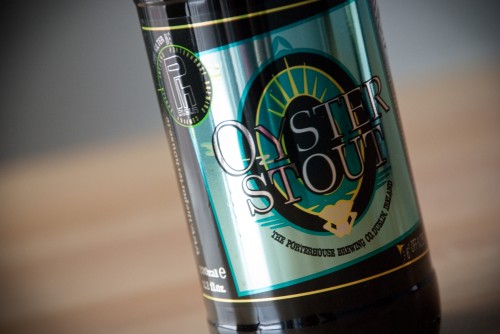
Porterhouse Oyster Stout. Image via clevelandhops.com.

Porterhouse Oyster Stout
Porterhouse Brewing Company
Dublin, Ireland

Another Irish independent challenging the industrial breweries is Porterhouse, a brewpub that opened in Temple Bar, Dublin in 1996 and has since added locations in Cork, London and—wait for it—New York. The brewing company’s Oyster Stout is literally brewed with oysters, which is pretty gross, but this is actually their best selling stout to date.

Find it at: Fraunces Tavern, a Porterhouse-owned pub in the Financial District (54 Pearl St. at Broad St.),  or The Well (272 Meserole St.) in Bushwick.

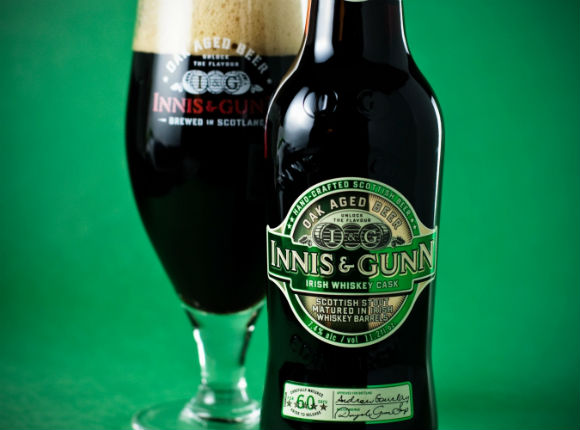
Innis & Gunn Irish Whiskey Cask

Innis & Gunn Irish Whiskey Cask. Image via bandadegaitas.mx

Innis & Gunn Irish Whiskey Cask
Innis & Gunn
Edinburgh, Scotland

This Scottish stout is matured in Irish whiskey barrels (so it’s half Irish, right?) and yields a dark, rich, boozy pour that’ll put the proverbial hair on your chest. Surprisingly, the stout reaches 7.4% ABV—less aggressive than other barrel aged stouts, which tend to clock in above 10%—but nearly doubling the alcohol content of typical stouts, which usually hover around 4%.

Find it at: Beer Boutique in Williamsburg, Brooklyn.

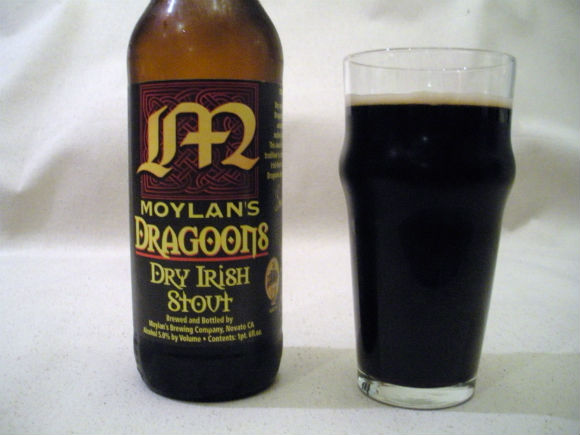
Moylan's Dragoons Dry Irish Stout

Moylan’s Dragoons Dry Irish Stout. Image via pfbarney.wordpress.com.

Moylan’s Dragoons Dry Irish Stout
Moylan’s Brewery & Restaurant/Marin Brewing Company
Novato, California

Of the non-Irish Irish stouts, Moylan’s Dragoons is furthest from the motherland but perhaps closest to its heart. The Dragoons Dry Irish Stout is made at Moylan’s Celtic-inspired brewpub in the North Bay Region of the San Francisco Bay Area, and its unique character comes, in part, from being brewed with barley and hops imported from the UK. As for its inspiration, Dragoons was conceived to commemorate General Stephen Moylan, an Irish expat who served as commander of the 4th Continental Dragoons during the American Revolutionary War. At 8.0% ABV, it’s the most alcoholic stout on this list, which also wins it a few points.

Find it at: Malt and Mold beer store in Gramcery (362 2nd Ave. at 21st St.); possibly Malt and Mold on the Lower East Side (221 East Broadway at Clinton St.). Call ahead, this bad boy is hard to find.

Harpoon Irish Stout Nitro

Harpoon Irish Stout Nitro. Image via harpoonbrewery.com.

Harpoon Boston Irish Stout Nitro
Harpoon Brewery
Boston, Massachusetts

This may not be brewed in or near Ireland, but since many of Boston’s residents really think they’re Irish, and because Harpoon went through hell trying to figure out how to nitrogenate beer on a large scale, and because it’s on nitro which means it’s extra rich and creamy, I’m allowing it. The Boston-brewed, time-honored take on the style yields an ale noted by the brewery as “full-bodied but sessionable,” with a creamy, roasty character that’s classic enough to convince you you’re drinking a traditional Irish stout.

Find it at: Rattle n Hum (14 E 33rd St., Midtown East) where 16 oz draught pours are being served up alongside other hearty stouts from around the country.

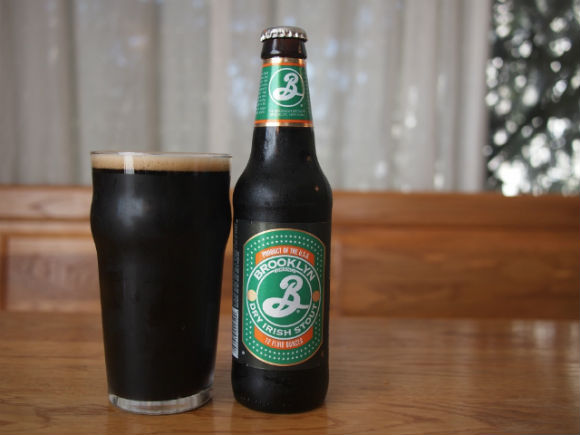
Brooklyn Dry Irish Stout

Brooklyn Dry Irish Stout. Image via brewedforthought.com

Brooklyn Dry Irish Stout
Brooklyn Brewery
Brooklyn, New York

A Brooklyn-based beer blogger can’t very well put out a lineup of Irish stouts without the borough’s famed Brooklyn Brewery, can she? The Brooklyn Dry Irish Stout is pretty self-explanatory—roasty, toasty, hints of coffee—and it tastes extra good knowing it’s brewed close to home.

Find it at: The Well or Uglyduckling (166 Smith St., Cobble Hill) in Brooklyn, on draft; Greenwood Park (555 7th Ave. at 19th St., South Slope) on cask; and The Shakespeare (24 E 39th St., Midtown East) on draft or cask.

Most importantly, don’t forget your Irish “cheers” out there today—Sláinte (sounds like slan-cha).


Note: Beer availabilities determined via BeerMenus.com. You might want to call ahead to make sure they’ve got what you’re looking for. It is St. Patrick’s Day, after all.

Bringing Beer-Enhanced Improv to Brooklyn

BeerProv at Littlefield

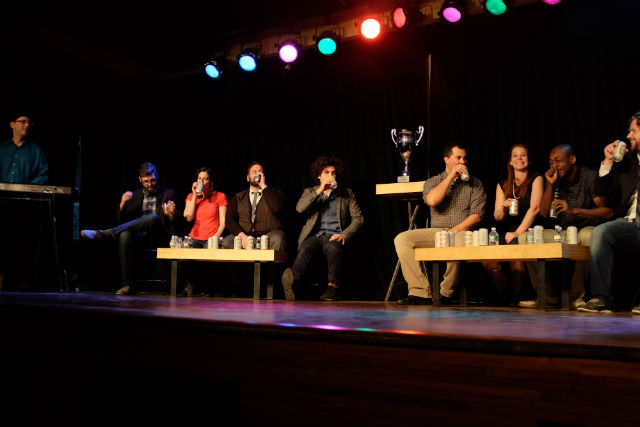
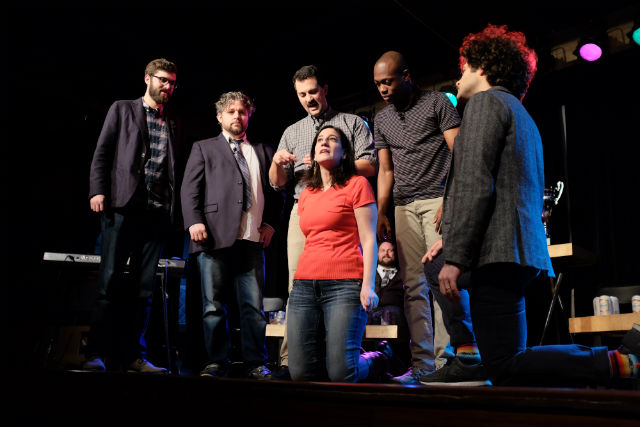
The BeerProv crew poses with the Mug of Champions at Littlefield, March 10, 2015.

BeerProv, an improv comedy troupe that utilizes beer drinking in its performances, made its Brooklyn debut at Littlefield last week. About a month before the show, I had interviewed the group’s founder, Jim Robinson, after we connected somehow on Twitter. He set aside tickets for myself and a guest to attend the event, and without knowing it, I was in for a treat.

It doesn’t take much to get me interested in someone’s passion project—pair a fresh idea with a drive to get it out there, and I’m probably I’m board. Put the word “beer” in your project, and I’m definitely on board.

BeerProv on stage

Throughout the show, BeerProv players shared sips of Narragansett on stage.

“BeerProv” is so named not because it has any specific ties to the beer industry, nor a sophisticated knowledge of craft beer (a knowledge that, it seems, is second nature to so many of us beer bloggers and lovers, yet is a world of mystery to other imbibers). The beer on stage was Narragansett, which Robinson could barely pronounce—he and BeerProv originate in Toronto, so we let that one go—and the “beer” part of BeerProv became apparent simply by the players drinking beer throughout the show. Sometimes between skits, sometimes during a sketch, and always with a “cheers” with the audience when a game was complete.

There’s been a lot of talk about improv lately; its core principals, its usefulness in business, and its ability to pull out a person’s comfortability in front of a crowd that perhaps was buried. But what I found most inspiring about the show was that it made us adult audience members feel like kids again. When Robinson called on the audience for names of countries for a skit, silly answers like “Paris” and “Pirates” came out, obvious missteps (as neither of those are countries) that would not fly in a conference room, but are jovially accepted in an improv show—in fact, pirates was chosen as a possible qualifier (the skit involved mimicking different accents).

BeerProv epic scene

The BeerProv finalists performed a 3-minute rendition of the Wizard of Oz.

As for the audience members, one couldn’t ask for a better crowd. Small enough to feel intimate, large enough to feel significant (especially in a borough so saturated with talent), and overall complimentary and positive. I spoke to a gentleman named Mike who came with a group of friends; he told me this would be his third time seeing the BeerProv show. He liked it so much, he’s attended every New York performance the group has had (this was the Brooklyn debut, but it had previously run last year in Manhattan). On the restroom line later in the night, attendees chattered about the show, how funny it was, and how it was “better than expected.”

It’s funny, that reaction. While certainly a compliment, it states that one hadn’t expected something to be that good. I’m guilty of the same—I hadn’t know what to expect, really—I’m not much of an improv fan, or comedy show goer for that matter. I, too, was more than pleasantly surprised. Robinson and his hand-picked crew of New York comedians put on a show that felt, honestly, like a group experience with friends.

BeerProv audience

A captivated BeerProv audience at Littlefield.

Beer is a very important part of social situations and public performances. In general, audience members, especially at venues like this one, are drinking throughout the events they attend. Oftentimes, the performers are drinking, too, but do it discretely, or keep it back stage. But not BeerProv. BeerProv makes it front and center, tells us it’s okay and fun, and connects us during intermittent “cheers!” moments between audience and stage. The crew is happy, the onlookers are happy, and the bar is certainly happy.

As a final thought, I’ll say this: give BeerProv a chance. I think the group could get big in Brooklyn, and I know I’ll be at their next show.

Photos by Patrick Phillips.