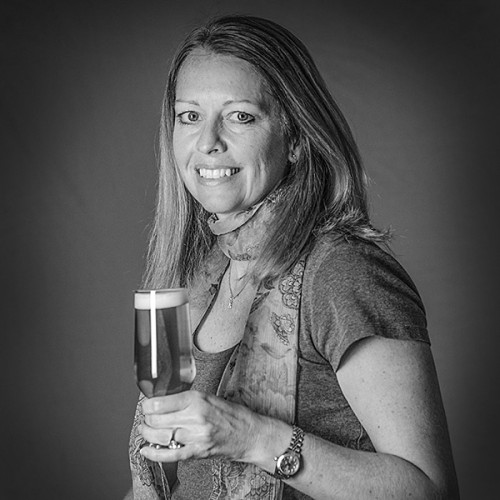
#WomanCrushWednesday: Kim Jordan

Kim_Jordan_New_Belgium

Kim Jordan, co-founder, New Belgium Brewing Company. Photo via NewBelgium.com

#WCW: Kim Jordan

Beer Cred:

Kim Jordan has more than 25 years’ experience in the craft beer industry. As co-founder of New Belgium Brewing Company (est. 1991) and having served as CEO for 15 years, she has strengthened the brewery and craft beer community at large as a leader, speaker and expert in all things beer biz. Jordan recently transitioned into a new role as executive chair at New Belgium, setting her sites set on strategy and  advocacy for progressive business practices both within the New Belgium Family Foundation and on the 1% For the Planet Board of Directors.

Well Said:

“Conservation is sexy.” – “Brewing Big (With a Micro Soul),” Entrepreneur.com, Nov. 2009

Cheers to that, Kim!
– BeerAffair

#WomanCrushWednesday: Christine Celis

Christine Celis (middle) at Clinton Hall, New York City, Jan. 2014

Christine Celis (center) at Pintley’s “(Very) Rare Beer Night,” Clinton Hall, New York, Jan. 2014

#WCW: Christine Celis

Beer Cred:

In January 2014, I had the pleasure of meeting the legendary Christine Celis at a (Very) Rare Beer Night organized by Pintley at Lower Manhattan’s Clinton Hall. Celis was rambunctious, well spoken and outwardly excited about her recent exploits into gypsy brewing, her beer company in Austin, Texas, the rare Belgian beers she had curated for the event that night, and of course, the legacy of her father, Pierre Celis.

As heiress to one of the world’s most popular beer brands, Hoegarden, Celis had a hand in bringing the Witbier style back to the United States in the 1990’s. Since then, she’s taken over the family brewery, imported an impressive portfolio of Belgian beers, joined up with a brewpub in Austin and sent her amazingly positive vibes into the craft beer and brewing community across the country.

Well Said:

“The thing about success is, sometimes we don’t know how we got there. With failure, you learn a lot. You learn why you failed, how you failed, and how you can prevent the same failures. Then, success just comes.” — Christine Celis – Brewmaster’s daughter, businesswoman and balance seeker, Coffee With a Stranger, melissalombard.com 

Cheers to that, Christine!

– BeerAffair

Brooklyn Pour 2015: New Venue, New Vendors and New Favorites

At the fifth annual Village Voice Brooklyn Pour Craft Beer Festival, held this year at the new Brooklyn Expo Center on the afternoon of Sept. 26, 2015, three things were clear: 1) New York City’s craft beer appreciating community continues to grow; 2) local and regional breweries are matching that growth with innovative and on-trend beer styles; and 3) Skylight One Hanson will be deeply missed.

Mug holdings contest

A mug-holding contest at the Sam Adams booth put Brooklyn Pour goers’ stein hosting strength to the test.

New Venue

The Brooklyn Expo Center on Greenpoint’s Franklin Avenue is everything you want in an event space: vast, well lit and high ceilinged, the venue has plenty of room to accommodate a growing list of brewers, attendees and sponsors, with photo ops aplenty, back patio space with skyline views and well-managed bathrooms to boot. However, those who have attended the Brooklyn Pour in the past know that this venue is no match to the art-deco masterpiece that is Skylight One Hanson in Fort Greene.

Plenty of distractions bordered the expansive space, inside and out: a photo booth for friends to pose and hashtag (complete with sponsored backdrop) hung in the front; tables touting contests and giveaways mirrored brewers’ coolers along the sides of the room; a mug holding contest sponsored by Sam Adams brought brawny bros to the rear; and a personal favorite, a Whole Foods-sponsored “Mix Six” pack photo op floated in the back of the room, beckoning grown men and women to slip into its shoddy cardboard hug (Halloween costume, anyone?).

Whole Foods Mix Six

Build your own custom six-pack of friends. This makes a great Halloween costume for beer buds!

Cold brewed coffee (Califa FarmsGrady’s) and scotch liquor tables (Aberlour, Jameson Caskmates) beckoned bean and booze hounds to the back of the room, providing a fairly welcome, albeit unnecessary alternative to the 125+ beer options available.

Liquor libations

Aberlour single malt whiskey (above) and Jameson Caskmates tastings were also available at the Brooklyn Pour.

Other than liquid libations, the Brooklyn Pour offered attendees food options on the outside patio — Nuchas, Papaya King and Coney Shack stood in front of the neighboring building, while Keste grilled cheeses and Zum Schneider brats and pretzels stood in tents closer to the building — but the options and seating seemed oddly limited in the massive amount of space. A few more tables and trucks would have transformed the area into a welcome respite from imbibing and bumping elbows.

New Vendors

Nearly 70 breweries were in attendance at this year’s Brooklyn Pour (a total of 67 were confirmed at press time), with 25 making their Brooklyn Pour debut. These included: Allagash Brewing Company, Anchor Brewing Company, Angry Orchard, Aspall, Austin Eastciders, Barrier Brewing Co., Big Alice Brewery (VIP only), Downeast Cider House, Fentimans, Fire Island Beer Company, Firestone Walker Brewing Company, Greenport Harbor Brewing Co., Iron Maiden, Kronenbourg Brewery, Lost Nation Brewing, Newburgh Brewing Company, North Coast Brewing Company, Oskar Blues Brewery, Samuel Adams, Sixpoint Brewery, Speakeasey Ales and Lager, St. Feuilliens, SweetWater Brewing Company (VIP only), War Flag Brewing Company, and Weihenstephan.

Breweries represented last year who did not return in 2015 included a total of 35: 508 Gastrobrewery (now closed), Ayinger, Bayou Teche, Bear Republic, Boulder, Brewery Ommegang, Broken Bow, Bronx Brewery, Crispin Cider, Dyckman, Founders, Goose Island, Grimm Artisanal Ales, Gun Hill, Harlem Blue, Harlem Brewing Company, Ithaca, Lagunitas Brewing Co., Lake Placid Brewery, Lindemans Brewery, Magic Hat Brewing Company, MOA Brewing Company, Original Sin, Radeberger Brewery, Radiant Pig Craft Beers, Rekorderling, Samuel Smith, Saranac, Shipyard Brewing Company, Sly Fox Brewery, Steadfast Beer Co., Stevens Point Brewery, Transmitter Brewing, Wolffer Estate Vineyard and Yonkers Brewing Co.

New Favorites

Disclaimer: we were not able to make it to every booth. That being said, we have an eye for interesting brews, and these were some of our new and noteworthy favorites.

BKPour2015_Barrier

Barrier Brewing Co. Red Button Imperial Red Ale


Eataly

Birreria Eataly Strawberry Blonde Cask Ale


Rockaway Brewing Co. NY Pharm (and Justine!)

Rockaway Brewing Co. NY Pharm

Rockaway Brewng Company NY Pharm


Lost Nation Mosaic Single-Hop IPA

Lost Nation Mosaic Single Hop IPA


Weihenstephaner

Weihenstephaner

Crow Weiss

Comet Weisse

Weihenstephaner Comet Weisse


Third Rail IPA

Third Rail Beer Skyland IPA


Oskar Blues John

Oskar Blues IPA 


Finback Brewery

Finback Brewery Close of Day


#WomanCrushWednesday: Wendy Littlefield

Wendy Littlefield. Photo via LinkedIn.com

Wendy Littlefield. Photo via LinkedIn.com

#WCW: Wendy Littlefield

Beer Cred:

In honor of Brewery Ommegang’s 18th birthday next month and my departure for Belgium today, this week’s #WomanCrushWednesday goes to Wendy Littlefield. Along with her husband, Ed, Littlefield’s accolades go far beyond a bulleted list. From a romantic start of eloping in college, moving to Belgium and falling in love—with the tradition and taste of Belgian beer, that is—she became the first American woman inducted into the Belgian Brewers Guild and was nominated for the Mercurius Award, the highest civilian honor bestowed by the Belgian government.

Back stateside,  in addition to starting two beer businesses, she started several community-driven food and drink events and associations in her now-hometown of Cooperstown, N.Y. (Belgian Comes to Cooperstown among them). You can learn more about the Littlefields in the self-told “Very Long and Boring Story” of  her career in beer—a lengthy one, yes, but there’s nothing boring about it.

Well Said:

“We have been at this business for 31 years and still adore it, and we are still married and capable of working together. How very fortunate we are. We think of ourselves as cultural anthropologists explaining culture through beer.” – “Why We Do What We Do— An Interview With Our New York Distributor,” March 2012, BelgianBeerExperts.com 

#WomanCrushWednesday: Carol Stoudt

Photo via The Daily Meal

Photo via The Daily Meal

#WCW: Carol Stoudt

Beer Cred:

Carol Stoudt is often touted for being a craft beer pioneer,  and not only as a woman—she was crowned “Queen of Hops” (a media-given title) as the first female brewmaster and brewery owner in American history post prohibition, but was also one of the first brewmasters and brewery founders of that time, starting her business in what was arguably the most important year of the craft beer revolution, 1987. Filling rolls that were hardly there to be filled, Stoudt showed the country that craft beer belonged here, and she’s continued to do so for the last 28 years.

Well Said:

“My advice to anyone wanting to get in the business is to work in a variety of types and sizes of breweries or restaurants, as well as sales, if one is planning a micro. One needs not only passion but a willingness to work hard in all areas.” – Journey to the Beer Store, April 11, 2013

Beer Quote: Dave Carpenter on Fresh Hops

“Fresh hops remind us that there is virtue in reserving some things for special occasions.” — Dave Carpenter, “The Last Seasonal,” Craft Beer & Brewing Magazine,  Aug.-Sept. 2015

I truly savored this Brewers’ Perspectives feature unveiling commercial craft brewers’ approaches to utilizing the extremely ephemeral wet hop. With harvest season upon them, Left Hand Brewing Company ( Warrior IPA), Crazy Mountain Brewery (Sticky Fingers Wet Hopped Ale) and Comrade Brewing Company (Superpower IPA, a 2014 Great American Beer Festival Silver Medal winner in the Fresh or Wet Hop Ale category) each demonstrate the delicate nature of fresh, local hops, and the worth of going great lengths to achieve them.


Photo credit: Dave Carpenter “Hops Harvest 2015: Meet the Hops Harvesters

#WomanCrushWednesday: Jill Redding

#WomanCrushWednesday is a BeerAffair series highlighting female leaders of the beer and brewing industries. View past crushes by clicking #WomanCrushWednesday or #WCW.

Jill Redding, editor for the Brewers Association.

Jill Redding, editor-in-chief at the Brewers Association.

#WCW: Jill Redding

Beer Cred:

As the Brewers Association editor-in-chief, Jill Redding is responsible for overseeing the bi-monthly publication (every two months) of Zymurgy,  a magazine “for the homebrewer and beer lover” which informs amateur beer makers on trends, best brewing practices, award-winning recipes and industry events, and the New Brewer, “a passionate voice for craft brewers,” created to provide commercial startup breweries with information on topics like brewing technology, problem solving, and management.

The Brewers Association (BA) is a non-profit trade association established “to promote and protect American craft brewers, their beers and the community of brewing enthusiasts.” In addition to its publications, education, insights and statistics pertaining to the craft brewing industry, the BA is responsible for major industry events such as the Craft Brewers ConferenceGreat American Beer Festival, SAVOR and World Beer Cup.

Well Said:

“Kudos to all homebrew clubs for teaching the world to brew, and for giving back to their communities!” — Brew’s Up, Indeed, Zymurgy Vol. 38 No. 5


Cheers, Jill!
Beer Affair

#WomanCrushWednesday: Julia Herz

#WomanCrushWednesday: Julia Herz

Julia Herz, Brewers Association Craft Beer Program Director. Photo via BrewersAssociation.org

#WCW: Julia Herz

Beer Cred:

Well Said:

“Our craft breweries are small businesses that have helped bring great innovation and a less gender-targeted approach to beer marketing than ever before—I’ll cheers to that!” – Weighing in on Women and Beer, craftbeer.com, Aug. 2015

Cheers to that, Julia!
– Beer Affair

Craft Beer is Not a Fad

In a food and beverage market in which new iterations of products vie for consumers’ attention daily, if not hourly, a certain caste of critics like to claim that craft beer is a fad, a class of drinks in fashion for the time being that will eventually—perhaps literally—fizzle out. It is these commentators who are perfectly content sticking to the American lagers of yore, cracking bottle after bottle of Budweiser, patiently waiting for consumers to return to their comfort zone of cheap, flavorless beer.

Yet, as in other industries in which a new trend took hold of the nation, the beer industry is not simply experiencing a blip that will be forgotten when things return to business as usual. Business is not going to change to usual. The craft beer craze is here to stay, and it’s only going to continue growing as big beer companies, or at least their subpar products, gradually lose the ability to quench beer drinkers’ thirst for good beer.

The Levis Theory: Craft Beer is Here for Good (and Gender Neutral)

Craft beer is the denim jeans of pants. True, beer has its en vogue styles—double and imperial IPAs, Brettanomyces-fermented “horse blanket” sours and barrel aged-to-infinity barley wines may go the way of whitewashed jeans, Capri jeans and bell bottom jeans—but just as denim came into the picture and never left, people are not going to change their minds about drinking beer that better suits their needs.  Perhaps radical at the time, denim became a staple of the American (and Western) wardrobe for men and women everywhere, and people never stopped wearing it. They’re not going to stop drinking better beer, either.

The Playstation Theory: Craft Beer is Adapting to a Changing Market

Whether a gamer, Gen X-er, parent or arguably none of the above, almost everybody knows what Nintendo is. It’s the video game company that created Mario, the Mickey Mouse of video games, the arcade game from Japan that changed the world.

However, ask any modern gamer about Nintendo today, and they’ll shrug. No longer at the forefront of video game innovation, Nintendo has fallen by the wayside while it produces game after game with the same characters, for the same media. In the meantime, other, newer, console companies have been competing for first place: X Box and Playstation.

Playstation is continually coming out with new consoles, controllers, games and stories. Playstation 1, 2, 3 and 4 have each been relevant and coveted, even with X Box and X Box Live as its competitors. Year after year, both systems create new reasons to buy their consoles, their extensions, their games and those games’ new features.

Perhaps the most important distinction between Playstation/X Box and Nintendo is the existence and availability of (free) games in a medium that’s very important to players: the Internet (and in particular, mobile devices). While other video game companies have adapted to new technologies available to game players, Nintendo has famously faltered, preventing its products from becoming available for free or on mobile devices, and as such, it has been left behind. By refusing to adapt to changing consumer demands, the video game giant has become less successful.

As craft brewers invent new ways to make beer and create more locally-focused brews, holding their audience from batch to batch, big beer companies like Bud are slowly but steadily losing market share.

The Mrs. Meyers Theory: Craft Beer Costs More Because it’s Better for You and the Environment

When I was growing up, two or three brands of cleaning products shouted out for shoppers at local supermarkets. Chemicals had to be kept out of sight and under kitchen sinks because they could kill your children. Somewhere, meanwhile, Mrs. Meyers was brewing up new recipes for soaps and household cleaners in her eco-friendly kitchen.

As more environmentally conscious brands tried their hand at products that could actually clean your house without killing you—and look and smell good while they were doing—the next generation of house-cleaning consumers emerged. Names like “Method” and “Honest” bumped their pretty bottles up against harsh names on large containers like “Clorox” and “Windex.” Mrs. Meyers moved in next to Mr. Clean.

Budweiser and Coors may not be poison – I still drink it from time to time, just like I still use bleach to scrub my tiles from time to time – bleach will still clean your tiles incredibly well, just like Budweiser will still give you a buzz. But put simply, when there are better options, wouldn’t you rather do it better?

Compared to macro beers, micro-brewed beer is better for you because its ingredients maintain their nutritional integrity. In other words, the malted barley that is used to make beer and the liquid that’s extracted from it (along with what’s extracted from fruits, herbs and other ingredients included in many microbrews) stays present in the beer that you end up drinking.

This is not the case for major “lawnmower lagers.” Big brands remove much of the nutritional content in their beers via pasteurization to ensure homogeneity prior to sale. Craft brewers not only combat this “empty calories” scenario, but even serve to benefit the bodies of the health-conscious—used as a recovery beverage after a period of physical exertion, craft beer can actually replenish runners’ or cyclists’ electrolytes, as well as rebuild much needed muscle tissue due to vitamins present. (In fact, one Dutch study performed at the TNO Nutrition and Food Research Institute found that craft beer drinkers had 30 percent higher levels of vitamin B6 in their blood than non-drinkers, and twice as much vitamin B6 as wine drinkers.)

In my own experience, I have seen a considerable difference in the benefits of micro vs. macro beers in another area related to their ingredients: consumption. For myself and many friends, it has often been the assumption and practice that light beers are made for drinking in large quantities. Thanks to their being cheap, watered-down and easy to “chug,” they are ubiquitously present on college campuses to drink during activities that encourage binge drinking. If only for the sheer volume of bad beer drinking habits (beer pong, anyone?), experiences I’ve had and witnessed among the likes of Coors and Natural Light are not ones I would deign to repeat.

Craft beer, on the other hand, is meant to be savored. Even over a period of several hours, two companions might share two or four beers, as opposed to the dozen or more that could be crushed between the same people in the same amount of time otherwise. Studies have proven the benefits of moderate consumption of beer, qualifying the beverage as part of a healthy diet that can promote well-being, decrease risk of Alzheimer’s, achieve cancer-fighting antioxidants and contribute to LDL or “good cholesterol” which prevents heart disease. (Even further, a 2009 Tufts University study revealed that elderly test subjects who consumed a moderate amount of beer every day achieved higher bone density than those who abstained.)

Consumers’ tendency toward fewer, better, more thoughtfully crafted beers of a wide variety isn’t limited to “trendy” areas, either—the trend is taking hold across the United States, and it’s happening so rapidly in every region that a recent Brewers Association survey determined the majority of Americans live within 10 miles of a local brewery.

A fad implies a temporary fixation with a product or cultural item. The thousands of microbreweries cropping up across the country may be new, and surely many will fail. But the industry at its core will not fail and it is not temporary. Craft beer is a movement, both culturally and economically. As we gain more access to small and independent brewing companies making beers with fresh, local ingredients, we and the next generation of beer consumers will lose interest in lagers lacking flavor, inventiveness and versatility. We’re not drinking craft beer because it’s cool. We’re drinking it because we finally can.