#WomanCrushWednesday: Mellie Pullman

Now in a millennial world, it’s not so surprising that women are joining the beer community in troves, stepping onto the scene as sales representatives, marketing coordinators, reporters (ahem) and imbibers, and—although they are still few—brewers and brewmasters.

But before there were us gals who started appreciating good beer post-2000 (although we still may feel uniquely, utterly female in a scene that continues to be dominated by beer guts and beards), there were women like Mellie Pullman, who I’d like to spotlight for my first #WomanCrushWednesday (#WCW) post here on Beer Affair.

I do not mean this in the literal or romantic sense, as I’ve never met Pullman personally, I mean it simply in the sense that my “love affair with beer” (where the name Beer Affair came from) is due in part to women who flew their freak flags high before it was popular, or even possible, for gals like me to be a part of the beer community.

cbb-replantingtheseeds

“Replanting the Seeds of Brewing,” Craft Beer & Brewing, May 15, 2015.

After re-reading a feature written by Tara Nurin in Craft Beer & Brewing last month, “Replanting the Seeds of Brewing,” I was reminded of all of the women I have yet to meet, the history I have yet to learn, and the amazing strides women have made in this still-young industry since it began its second wind in the 1980s.

As a young woman swept up into the romance of the craft beer world just five or so years ago, I have to acknowledge the true pioneers before me, and commend these ladies for stepping up to the plate when it was even harder to be a female in a male dominated business like beer. (Or, as Nurin phrases it, for each woman who had to “finesse her way out of enough brewer-as-bearded-German-guy stereotypes.”)

In the days before national women’s industry groups like the Pink Boots Society (and in my case, local groups like the Beerded Ladies), these gals were among the first to explore the beer business, truly planting the “seeds” that sprouted roles for women in the brewing industry today. Among the “firsts” these femmes accomplished, Pullman is particularly #WCW-worthy for the following:

1. She was first female brewmaster in contemporary U.S. history;

2. She helped bring Utah its first brewery, Wasatch Brewery, in 1986; and

3. She lobbied to modernize the alcohol laws in Utah which were, even up until the late 80s, quite restrictive.

Beginning with Pullman and moving through the significance several more, Nurin’s article attributes beer props to Beth Hartwell, who co-founded Hart Brewing in Kalama, Wash. (now Pyramid Breweries) in 1984; Rosemarie Certo, who co-founded Dock Street Brewing in Philadelphia in 1985; Carol Stoudt, who became the nation’s first female sole proprietor-brewer in 1987; Barbara Groom and Wendy Pound, the first female ownership team in the industry, who opened Lost Coast Brewing in Eureka, Calif. in 1990; and Teri Fahrendorf, currently specialty malt account manager at Great Western Malting in Vancouver, Wash., who entered the industry at 1988 as a brewing intern and now has 19 years’ experience as a brewmaster and brewery supervisor at various locations.

Although you can take the woman out of the brewing industry (according to Nurin, Pullman left her post at Wasatch just three years after co-founding it), you can’t take the brewing industry out of the woman—Pullman is now serving as an associate professor at Portland State University, where she teaches several courses in the Business of Craft Brewing Certificate program.

Thoughts on L.A. BEER, the new webseries sitcom now streaming on YouTube

I take a positive tack on beer related ventures, so I’m not going to say L.A. BEER is terrible. All sitcoms are terrible. These guys and gals are trying though, and if it’s in the name of getting beer making in front of the masses, then I can try, too. The problem I have is, there’s hardly any beer making. Fair enough, but if we’re to assume the show is casting a wide net to catch viewers, then they’re missing the mark on two counts. For the beer nerds, there’s definitely not much going on in the beer knowledge department. For the vaguely beer curious, it’s unclear what these people are doing in their office every day if it’s not brewing.

In the five webisodes released in time for American Craft Beer Week, we see the struggle of fictional Los Angeles microbrewery, Silver Screen Brewing (how cute), in five quick and disheartening stages. In episode one, “New Brew,” the latest beer fails because it was made with a stinky Asian fruit (durian) in the brewer’s futile attempt to make something exotic (if that’s a reference to Ex Novo brewmaster, Jason Barbee, who brewed a Jacked Up Saison with one hundred cans of jackfruit, it’s only a compliment).

In episode two, “Silverlake Strawberry Ale,” another beer fails and is protested against by an angry mob of flannel-wearing mothers due to its kid-friendly label art (because hipster moms). In episode three, “Straight Up Shandy,” the boss fails to recognize one if his employees is homosexual, and said employee fails to stand up for himself (because being gay is hard and older white men don’t get it). Episode four, “Culver City Crowdfunding,” chronicles a Kickstarter campaign to can a beer gone wrong (because millennials) and episode five, “Fairfax Beer Fast” (where exactly is this brewery, anyway?), takes us through the lovely journey of the female employees attempting a juice cleanse that makes them go crazy to the point of becoming demonic, while the men have fun doing a beer cleanse (because girls are insane and think beer makes them fat).

Basically, these first introductions show nothing but failure in every corner of the brewing industry, from the launch of the brewery to the flagship beer to the marketing and distribution. Mix this in with a few staid personality types (the marketing bitch, the internet-and-approval-crazed intern, the gay guy and the clueless boss), a few lesbian and hipster jokes (or lesbian hipster jokes, as episode two would have it), and a few jabs at #craftbeerproblems and you’ve got yourself a sitcom. I guess?

The five episodes streaming right now total about 25 minutes all together, so it’s fair to say the production had to cut to the chase in terms of telling us who’s who and setting up their struggle. Fine, it’s your plot. But the parts that reinstate social assumptions like girls not drinking craft beer—even when it’s literally their job—leave room for improvement.

Some things the show is correct in portraying is that starting a brewery is hard, that the craft beer business involves a myriad of stages and issues and departments outside of the brewing itself, and that even brewers struggle to keep up with beer styles and sex appeal in a social media saturated market. But is it realistic? I don’t know, I’ve never worked in a brewery. My initial question still remains, though: Where’s the beer?

Brewing from Scratch: Ex Novo Brings Fresh Ingredients, Fresh Perspectives to Portland

ex novo brewing co

Ex Novo Brewing Company. Photo via Facebook.

Every brewery has its own style. There are the science buffs, who rely on organized spreadsheets, strict ingredient measurements and counting yeast cells in a petri dish to make sure attenuation is just right. Then there are the artistic types, who rely more on “feeling” and inspiration to create new brews on the fly. Then there are craft brewing’s political moderates, who prefer the level of organization necessary to keep a tight ship running smoothly, and are also ready to change course if a recipe route isn’t leading to the right place.

At Ex Novo Brewing Company in Portland, Ore., Jason Barbee is somewhere in the middle. Part scientist, part creator and part innovator, Barbee is the loveable mastermind behind Ex Novo’s new brews, which run the gamut from traditional Northwest amber to a saison packed with jackfruit. One thing that’s certain is, he’s here to mix things up.

Ex Novo Brewing Company opened in July 2014 under the direction of Joel Gregory, a young, even-tempered engineer-turned-brewer who gives the striking (albeit unlikely) impression that he opened this business overnight. The industrial space is sleek while welcoming: over the bar, a versatile beer list hangs over a row of just-cleaned taps; an equally adaptable food menu on the bar displays upscale-made-affordable small plates and sandwiches; and, neatly placed without sterilely uniform, high rectangular and low circular tables fill the majority of the front space, with booths against the wall, and kitchen hidden behind and a well-maintained brewery in back.

“This is my first brewery job, the one that I started,” says Gregory, who previously worked as an engineer in the electrical and renewable energy fields but felt his profession lacked creativity. “I like [engineering], but I never really felt I had any creative outlet and I wasn’t very good at it. I was always more business minded and creativity minded.”

The brewery’s name, “Ex Novo,” is a Latin phrase translating loosely to “from scratch”—an appropriate epithet for a business conceived of and set afloat with little guidance—and virtually no brewing experience.

If it’s a creative business he wanted, that’s certainly been accomplished—on top of his unbiased, nascent perspective on professional brewing, Gregory is planting a flag in wholly unchartered territory. Ex Novo is not only built “from scratch,” but is “the first and only nonprofit brewery in the country,” he tells us. After taking salaries and brewing expenses out of business revenues, his profits go to a selection of community-serving organizations that need money more than he needs a bigger house or new car.

Ex Novo founder Joel Gregory

Joel Gregory, Ex Novo Brewing Company founder and president.

As a homebrewer of five years with an itch for new ventures and an interest in nonprofit work, Gregory eventually came to the conclusion that opening his own nonprofit brewery would be the best and only way to combine his passions for beer and giving back. “A lot of [nonprofit] programs don’t need people, they need money,” he says. “This business model works—or can work if you do it right. I want to help that way.”

According to Gregory, the way to “do it right” is “being consistent and solid, and building something that people trust.” That’s hard to measure after just eight months, but being trustworthy is built into his business model; Ex Novo currently holds a commitment to four regional and international nonprofit organizations at $25,000 each, and has chosen a head brewer who has over six years’ experience at one of Portland’s craft beer mainstays, Deschutes Brewery.

The brewery currently runs as a three-man show with Gregory at the top as founder and general manager, Barbee as head brewer and Tommy as assistant brewer. In Gregory’s words, the brewery specializes in “lean, drinkable beers” that “occasionally get weird”—a description that may be hard to understand until you’ve tried them.

“We try to have something that anyone can walk in [and enjoy], whether they’re the farthest spectrum of beer geek or total novice,” says Gregory. He and Barbee agree that Ex Novo should, at least for now, incorporate a mix of styles agreeable to Portland’s many discerning palates. “We want to do those things and do them really well,” Gregory says.

Currently, that translates to brews like Damon Stoutamire, a balanced stout with dark chocolate, roast and slight coffee ntotes; How the Helles Are Ya’, a crisp, light lager with full body and German beechwood smoked malt; the self-explanatory Hoppy Pils; and Red Red Wheat, an amber wheat ale brewed with specialty malts and hops yielding sweet caramel and finishing off with a hint citrus. In case you think you’re getting the picture, there’s also the game-changing Jacked-Up Farmhouse, a fruity sour beer brewed with eight gallons of jackfruit, the origins of which beg an entire story of its own. In other words, we’d say the new breweries beers surpass “drinkable” and lean more toward novel, fresh and inventive.

Ex Novo head brewer, Jason Barbee

Ex Novo Brewing Company head brewer, Jason Barbee, caught in the act of tap cleaning.

Barbee, like many brewers, takes a seasonal approach to recipes and tap lists, requiring he always be thinking ahead. “We tend to brew seasonally and brew to what we want to drink,” Barbee says. “Right now, given that it is still not great outside in Portland”—he gestures to the floor-to-ceiling windows, whose view likely mirrors the concrete gray floors we stand on as the city’s daily dose of gloom rolls in—“we’ve got a peated Scotch ale, [which is] a bigger, boozier malt-forward beer, a traditional Northwest amber, in which you get a little more of that malt character and a lot more body coming through with a lot of hop, and we just transferred an imperial IPA yesterday. We try to think, ‘what will we want to be drinking four to six weeks from now?’”

At the time of our visit, on March 20, the first day of spring, Ex Novo has a few fermenting beers on deck that evidence its—and Barbee’s—versatility when it comes to an inaugural spring lineup. There’s a Maibock in one fermenter, readying itself for a lagering period that will precede its release in about six weeks; there’s a not-yet-released two hop double IPA that’s now, as I write this, on draft as Dynamic Duo IIPA, and in another metal fortress is a soon-to-be Belgian wheat with lime and juniper, meant to emulate a gin and tonic. The best seller, Barbee says, is the Eliot IPA, a creation he admits is not yet perfected. It’s also the one he brews the most, exemplifying why Ex Novo is the right fit for him.

“I have a lot more freedom here,” he says. “We’re so new that everything is still in development, which is fun. Even in our core brands, the recipes are so much in development; I have yet to brew Eliot the exact same way. I’m still trying to iron out the recipe to be exactly what we want.” Though he bears no hard feelings toward his past job, his position here at a brewery not yet a year old, and an innovative one from its very foundation, noticeably contrasts the six and a half year tenure as a Deschutes brewer. “[Each] new beer makes it exciting and fun to brew. There’s no set in stone recipe or magnate, and I don’t think that’ll ever happen.”

Though we didn’t know it at the time, Barbee sums up precisely what makes Portlandia a brewtopia, stating the sentiment of many Portland brewers:

“[Portland has] a really interesting beer scene because we really have the best of the best in terms of all the raw materials. Hops are all grown very locally, within driving distance…Wyeast is, in my opinion, the best yeast lab and they’re an hour from here. We have really good water. Great Western Malting and Country Malt Group are 10 miles from here. We have very good access to very high quality ingredients and lots of them.

“Plus, because we have such a loyal beer crowd, we get to be on the cutting edge of everything and people are accepting of that. We can brew whatever weird thing we can come up with and somebody will like it. As long as you’re making quality beer, you can pretty much brew anything you want and people will accept it.”

Though his family lives in North Carolina, Barbee has had no temptations to leave the Portland craft beer scene. “[The North Carolina beer scene] is really cool and growing a lot, but it’s a decade behind the scene here,” he says. Well played, but we sense another beercation in our future.

British Beer in Bay Ridge at Brooklyn’s Only Welsh Bar, Longbow

The day I walked the length of the mighty Fifth Avenue in Bay Ridge, seeking contenders for the Brokelyn Beer Book’s South edition, one bar of many welcomed me into its warm, wooden arms: Longbow.

Supposedly the only Welsh bar in New York City, say the owners, Longbow is a perfect place to sit a spill on a Saturday afternoon when you’re hankering for a refreshing UK brew, wouldn’t mind seeing a bit of sport and perhaps fancy a chat with a tipsy regular or two.

Get a taste of it here.


ICYMI: Sugarburg Has Coffee Now

In case you missed it:

Sugarburg, one of my favorite places in the city right now, has added coffee to their repertoire. This development makes the establishment pretty much perfect.

  1. It’s beautifully built and designed, with artistic, woodsy, creative facets the owner and his brothers and friends built by hand (inspired by Burning Man).
  2. It’s located on Williamsburg’s most convenient corner, Metropolitan and Union Ave., where the L and G train meet gracefully at the bar’s doorstep.
  3. The craft beer selection is impeccable and sizable while carefully curated, and constantly changing.
  4. The food is great, oh man, the brussels sprouts, and the poutine which might be the best in the borough.
  5. They specialize in whiskey, also—NBD.
  6. NOW THEY HAVE COFFEE.

The new coffee program is headed by lead barista Michael Mason, serving up flat whites, cold brew and drip by way of Brooklyn Roasting Company, accompanied by a full espresso bar. As an extra bonus, pastries have been added to the menu, too.

Check out the news in my post on Brokelyn—the title of this post is a link.


6 Irish Stouts to Drink Instead of Guinness on St. Patrick’s Day

Did you know that stouts originated in London? Or that the “stout” is actually an abbreviation of “stout porter,” a stronger style of the popular beer among early eighteenth century London dock workers?

Guinness was introduced, as the story goes, in 1759 by Arthur Guinness, at St. James’s Gate in Dublin, Ireland, where the draught is still brewed today. Yet, some speculate the story is hogwash and the beer actually originated in England. To add to the confusion, several varieties—like the Guinness Extra Stout we see here in the States in cans and bottles—are brewed in other countries (for us, Canada) and on top of that, the Guinness headquarters is in London!

It’s hard to say how “Irish” the Guinness you’re drinking today really is, so in an effort to get you educatedly drunk this St. Patrick’s Day, here’s a list of Irish stouts that are either 100% Irish or Irish-inspired, and are, by American terms, craft—that means no Murphy’s, Smithwick’s, Beamish or Killian’s, either, I’m afraid—all of those are owned by either MolsonCoors or Heineken.

O'Haras Irish Stout

O’Haras Irish Stout. Image via youtube.com.

O’Hara’s Irish Stout
Carlow Brewing Company
Bagenalstown, Ireland

O’Hara’s Brewery, or Carlow Brewing Company, is an independent, family-owned brewery located in Bagenalstown in County Carlow, Ireland. O’Hara’s Irish Stout, the company’s flagship beer, was first brewed in 1999 and has since won multiple awards as well as acclaim for staying true to Irish tradition. Robust, tart from Fuggle hops and espresso-like in its finish, O’Hara’s Irish Stout recreates a taste similar to the stouts of yore.

Find it at: Alewife (5-14 51st Ave., Long Island City); Barleycorn (23 Park Place, Financial District); Taproom 307 (307 3rd Ave., Kips Bay); Beer Authority (300 W 40th St. at 8th Ave., Midtown West);  and Draught 55 (245 E 55th St. at 2nd Ave., Midtown East).

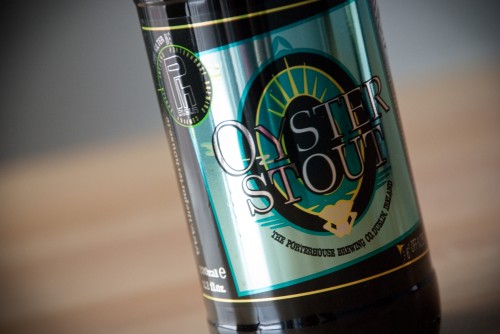
Porterhouse Oyster Stout

Porterhouse Oyster Stout. Image via clevelandhops.com.

Porterhouse Oyster Stout
Porterhouse Brewing Company
Dublin, Ireland

Another Irish independent challenging the industrial breweries is Porterhouse, a brewpub that opened in Temple Bar, Dublin in 1996 and has since added locations in Cork, London and—wait for it—New York. The brewing company’s Oyster Stout is literally brewed with oysters, which is pretty gross, but this is actually their best selling stout to date.

Find it at: Fraunces Tavern, a Porterhouse-owned pub in the Financial District (54 Pearl St. at Broad St.),  or The Well (272 Meserole St.) in Bushwick.

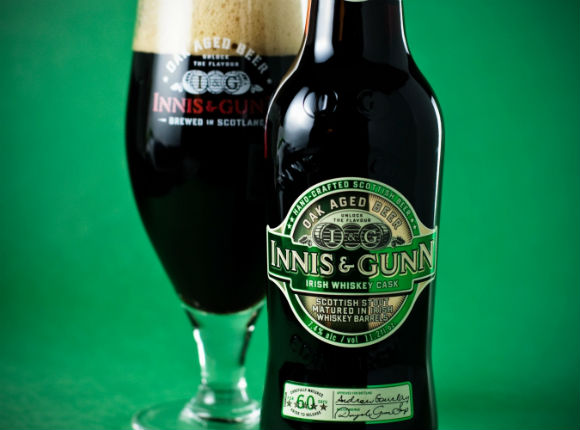
Innis & Gunn Irish Whiskey Cask

Innis & Gunn Irish Whiskey Cask. Image via bandadegaitas.mx

Innis & Gunn Irish Whiskey Cask
Innis & Gunn
Edinburgh, Scotland

This Scottish stout is matured in Irish whiskey barrels (so it’s half Irish, right?) and yields a dark, rich, boozy pour that’ll put the proverbial hair on your chest. Surprisingly, the stout reaches 7.4% ABV—less aggressive than other barrel aged stouts, which tend to clock in above 10%—but nearly doubling the alcohol content of typical stouts, which usually hover around 4%.

Find it at: Beer Boutique in Williamsburg, Brooklyn.

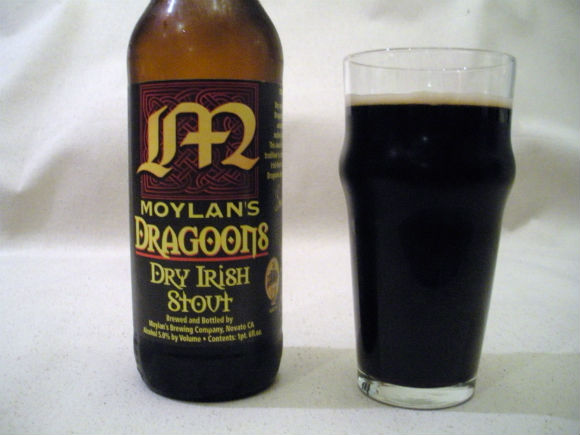
Moylan's Dragoons Dry Irish Stout

Moylan’s Dragoons Dry Irish Stout. Image via pfbarney.wordpress.com.

Moylan’s Dragoons Dry Irish Stout
Moylan’s Brewery & Restaurant/Marin Brewing Company
Novato, California

Of the non-Irish Irish stouts, Moylan’s Dragoons is furthest from the motherland but perhaps closest to its heart. The Dragoons Dry Irish Stout is made at Moylan’s Celtic-inspired brewpub in the North Bay Region of the San Francisco Bay Area, and its unique character comes, in part, from being brewed with barley and hops imported from the UK. As for its inspiration, Dragoons was conceived to commemorate General Stephen Moylan, an Irish expat who served as commander of the 4th Continental Dragoons during the American Revolutionary War. At 8.0% ABV, it’s the most alcoholic stout on this list, which also wins it a few points.

Find it at: Malt and Mold beer store in Gramcery (362 2nd Ave. at 21st St.); possibly Malt and Mold on the Lower East Side (221 East Broadway at Clinton St.). Call ahead, this bad boy is hard to find.

Harpoon Irish Stout Nitro

Harpoon Irish Stout Nitro. Image via harpoonbrewery.com.

Harpoon Boston Irish Stout Nitro
Harpoon Brewery
Boston, Massachusetts

This may not be brewed in or near Ireland, but since many of Boston’s residents really think they’re Irish, and because Harpoon went through hell trying to figure out how to nitrogenate beer on a large scale, and because it’s on nitro which means it’s extra rich and creamy, I’m allowing it. The Boston-brewed, time-honored take on the style yields an ale noted by the brewery as “full-bodied but sessionable,” with a creamy, roasty character that’s classic enough to convince you you’re drinking a traditional Irish stout.

Find it at: Rattle n Hum (14 E 33rd St., Midtown East) where 16 oz draught pours are being served up alongside other hearty stouts from around the country.

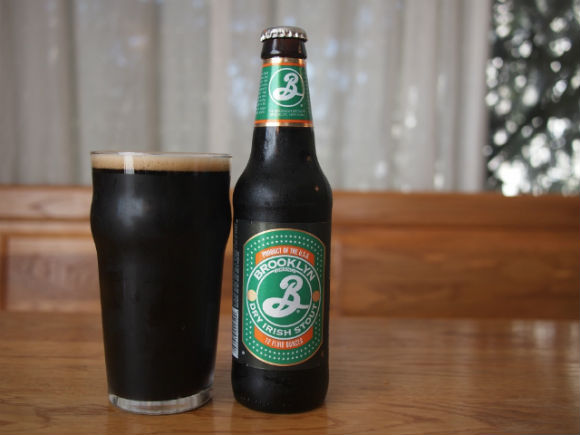
Brooklyn Dry Irish Stout

Brooklyn Dry Irish Stout. Image via brewedforthought.com

Brooklyn Dry Irish Stout
Brooklyn Brewery
Brooklyn, New York

A Brooklyn-based beer blogger can’t very well put out a lineup of Irish stouts without the borough’s famed Brooklyn Brewery, can she? The Brooklyn Dry Irish Stout is pretty self-explanatory—roasty, toasty, hints of coffee—and it tastes extra good knowing it’s brewed close to home.

Find it at: The Well or Uglyduckling (166 Smith St., Cobble Hill) in Brooklyn, on draft; Greenwood Park (555 7th Ave. at 19th St., South Slope) on cask; and The Shakespeare (24 E 39th St., Midtown East) on draft or cask.

Most importantly, don’t forget your Irish “cheers” out there today—Sláinte (sounds like slan-cha).


Note: Beer availabilities determined via BeerMenus.com. You might want to call ahead to make sure they’ve got what you’re looking for. It is St. Patrick’s Day, after all.

Bringing Beer-Enhanced Improv to Brooklyn

BeerProv at Littlefield

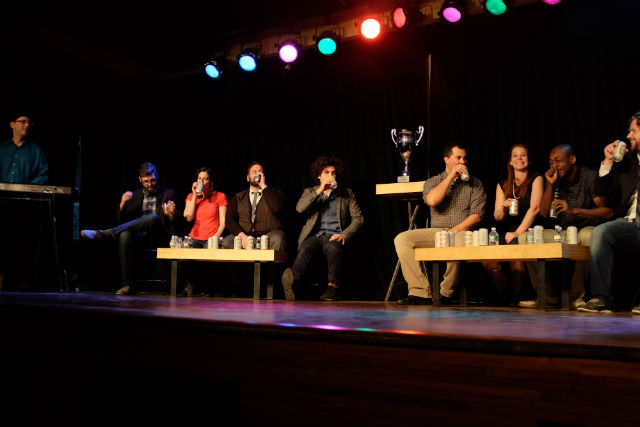
The BeerProv crew poses with the Mug of Champions at Littlefield, March 10, 2015.

BeerProv, an improv comedy troupe that utilizes beer drinking in its performances, made its Brooklyn debut at Littlefield last week. About a month before the show, I had interviewed the group’s founder, Jim Robinson, after we connected somehow on Twitter. He set aside tickets for myself and a guest to attend the event, and without knowing it, I was in for a treat.

It doesn’t take much to get me interested in someone’s passion project—pair a fresh idea with a drive to get it out there, and I’m probably I’m board. Put the word “beer” in your project, and I’m definitely on board.

BeerProv on stage

Throughout the show, BeerProv players shared sips of Narragansett on stage.

“BeerProv” is so named not because it has any specific ties to the beer industry, nor a sophisticated knowledge of craft beer (a knowledge that, it seems, is second nature to so many of us beer bloggers and lovers, yet is a world of mystery to other imbibers). The beer on stage was Narragansett, which Robinson could barely pronounce—he and BeerProv originate in Toronto, so we let that one go—and the “beer” part of BeerProv became apparent simply by the players drinking beer throughout the show. Sometimes between skits, sometimes during a sketch, and always with a “cheers” with the audience when a game was complete.

There’s been a lot of talk about improv lately; its core principals, its usefulness in business, and its ability to pull out a person’s comfortability in front of a crowd that perhaps was buried. But what I found most inspiring about the show was that it made us adult audience members feel like kids again. When Robinson called on the audience for names of countries for a skit, silly answers like “Paris” and “Pirates” came out, obvious missteps (as neither of those are countries) that would not fly in a conference room, but are jovially accepted in an improv show—in fact, pirates was chosen as a possible qualifier (the skit involved mimicking different accents).

BeerProv epic scene

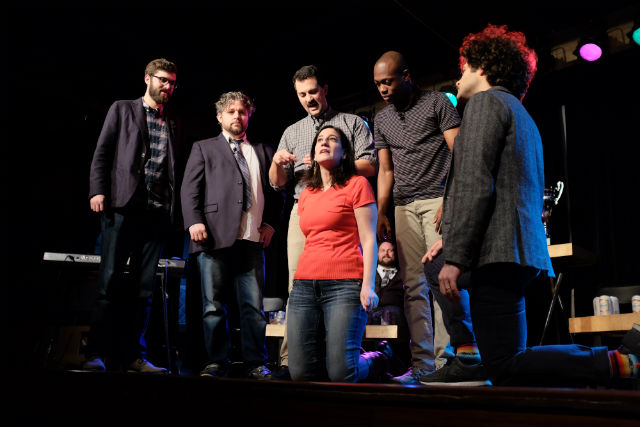
The BeerProv finalists performed a 3-minute rendition of the Wizard of Oz.

As for the audience members, one couldn’t ask for a better crowd. Small enough to feel intimate, large enough to feel significant (especially in a borough so saturated with talent), and overall complimentary and positive. I spoke to a gentleman named Mike who came with a group of friends; he told me this would be his third time seeing the BeerProv show. He liked it so much, he’s attended every New York performance the group has had (this was the Brooklyn debut, but it had previously run last year in Manhattan). On the restroom line later in the night, attendees chattered about the show, how funny it was, and how it was “better than expected.”

It’s funny, that reaction. While certainly a compliment, it states that one hadn’t expected something to be that good. I’m guilty of the same—I hadn’t know what to expect, really—I’m not much of an improv fan, or comedy show goer for that matter. I, too, was more than pleasantly surprised. Robinson and his hand-picked crew of New York comedians put on a show that felt, honestly, like a group experience with friends.

BeerProv audience

A captivated BeerProv audience at Littlefield.

Beer is a very important part of social situations and public performances. In general, audience members, especially at venues like this one, are drinking throughout the events they attend. Oftentimes, the performers are drinking, too, but do it discretely, or keep it back stage. But not BeerProv. BeerProv makes it front and center, tells us it’s okay and fun, and connects us during intermittent “cheers!” moments between audience and stage. The crew is happy, the onlookers are happy, and the bar is certainly happy.

As a final thought, I’ll say this: give BeerProv a chance. I think the group could get big in Brooklyn, and I know I’ll be at their next show.

Photos by Patrick Phillips.

Roscoe NY Beer Company Brings ‘Trout Town’ to NYC

Shannon (l) and Josh Hughes of Roscoe Beer Co.

Shannon Feeney, director of marketing (l) and Josh Hughes, brewmaster of Roscoe Beer Co. with Beer Affair’s Cat Wolinski, New York, N.Y. Feb. 22, 2015.

NEW YORK—The Roscoe NY Beer Company, known chiefly for its Trout Town brand of craft beers in Roscoe, N.Y., has announced it will expand distribution throughout the states of New York and Connecticut, including the five boroughs of New York City. The recent expansion will occur through Grapes & Greens and Ippolito Distributing. The beers are currently available through Dana Distributers, Dutchess Beer Distributers, Northern Eagle Beverage Company and Dichello Distributers.

Previously distributed only in the Roscoe, N.Y. area, the three Trout Town handcrafted beers—Trout Town Brown Ale, Trout Town Rainbow Red Ale and flagship Trout Town American Amber Ale—will now be available in 22 different counties across New York and Connecticut.

Roscoe brewmaster, Josh Hughes, told Beer Affair the expansion represents his and the brewery’s desire to increase awareness of the Roscoe, a small fishing town located 120 miles north of New York City.

“In addition to introducing our product, we want to bring people to Roscoe and strengthen the community,” Hughes told Beer Affair. “We feel we’ve added to the value of this unique destination.”

According to Hughes, Trout Town, both town and beer, has a mass appeal—and, in the case of the beer, is brewed for every palate. “You don’t have to be a craft beer lover to enjoy it,” he said. “We incorporate an easy drinking quality to our product.”

Hughes, who claims to be an avid fisherman in “Trout Town, USA” (though, admittedly not an ice fisherman) is looking forward to the next season, during which, he said, he will fish every day. Until then, it’s back to the brewhouse, where he’ll be applying his chemistry expertise to concocting the next Trout Town. (Before joining Roscoe, Hughes worked at a medical facility in Cooperstown, N.Y.)

“Brewing beer is a true art form and with the combination of my skills and guidance from everyone else on the team at the Roscoe NY Beer Co., we have created three great craft beers that can be enjoyed by everyone,” he said. “Now with our expanded distribution, we are able to share our hard work and passion with more beer drinkers across New York and Connecticut.”

Along with celebrating their expanded distribution, Roscoe Beer Co. will be unveiling a new tasting room and holding a grand opening this Spring. The new tasting room will feature a fish tank (full of trout, Beer Affair confirmed), floor-to-ceiling trees and a 16-foot glass window, all designed to promote the natural components of the area and the beer itself, which is brewed using only natural ingredients, according to the company.

As of April 2015, Trout Town beers will be available in: Fairfield, Litchfield, Middlesex and New Haven Counties of Connecticut; and Bronx, Brooklyn, Chenagno, Columbia, Delaware, Dutchess, Greene, Manhattan, Nassau, Orange, Ostego, Queens, Rockland, Staten Island, Suffolk, Sullivan, Ulster and Westchester Counties of New York.

For more information, contact Lauren Verini at lauren@adinny.com or 212-693-2150 x311.

5 Patriotic Beers for the Fourth

My friends over at Brokelyn published “The definitive ranking of summer 2014′s special edition beer cans” this week, which listed the Bud AmeriCan, Miller Lite 70s can, Gennessee flag can, Miller High Life red-white-and-blue can and the Narragansett 1975 Quint can as the top five aluminum consumable American summer beers.

In retaliation, I propose my own ranking, one forgoing the cheap can qualifier and embracing the craft and/or refreshingly crafted glass-produced, not mass-produced top five independent and family-owned patriotic beers you can drink today, period. It is, after all, Independence Day.

Victory Summer Love

Every Summer Love is a Victory. Photo via uwishunu.com

5. Victory Summer Love – Golden Ale

This golden ale was commissioned by Visit Philadelphia to capture the essence and history of the Victory city, one of the first settlements in the fine U.S. The bottle label features a baseball inside of a sizzling sun, the flavor is refreshing and lemony and the composition is full of American whole flower hops. Were it not for the German malts, this combination of the American pastime, American pastures and American taste reminiscent of lemonade from your childhood lemonade stand would render this an all-American beer.

Smuttynose Summer Weizen Six Pack

Wise up this summer with a Smuttynose Summer Weizen. Photo via smuttynose.com

4. Smuttynose Summer Weizen

What says wet hot American summer more than a (presumably) suburban mom in a (presumably) suburban pool? Embrace your lazy side and sip this lightly hopped simply brew of domestic and continental character perfect for a poolside, grillside or fireside.

Samuel Adams Summer Ale

No one is more patriotic than The Patriot. Photo via samueladams.com

3. Samuel Adams Summer Ale

Although the Boston Beer Company pushes the boundaries of “craft” brewing and personally doesn’t do much for me anyhow, come on, The Patriot. Sam Summer’s lemon peel and Grains of Paradise make this American wheat ale a big, tangy mouthful of Boston pride, which is probably as patriotic as you can get in New England without crunching a mouthful of Plymouth Rock. Rumor has it there are actual pilgrims’ tears of happiness in this one. Or was it sweat?

Yuengling Summer Wheat

Those drips don’t lie. Photo via yuengling.com


2. Yuengling Summer Wheat – Traditional Weizen Beer

Look at that eagle! Old Baldy may be nearing extinction here in the U.S., but Yuengling keeps the American dream alive on a plethora of bottle and cans designs with this guy. Here he is looking mighty fine on the Summer Wheat, a hazy heffe released in Spring as the third edition in a series of Yuengling seasonals. Did I mention the trump card that this is America’s first brewery? Don’t be a commi. Drink a damn Yuengling.

AleSmith Brewing Summer Yule Smith Ale

You made it! Cue the fireworks: Yule Smith Summer Holiday Ale is brewed especially for the July 4th holiday. Photo via alesmith.com

1. AleSmith Yule Smith Summer Holiday Ale

Summer seasonals typically limit their availability to March through July, but this 22oz double IPA from AleSmith is available only in July and August. Released specifically for the Fourth of July holiday, the Yule Smith Summer is strong (ABV 8.5%), bitter (105 IBUs) and assertive as the first settlers. In AleSmith’s words, it’s “an unaplogetically bold expression of fresh American hops.” What could be more American than that? Check for availability on this one, it’s a rare find.

There you have it. A palatable list, and frankly, vibrant journey through some great beers of our nation made, with love, right here in the U. S. of A. Get drinking, America. Happy Independence Day.


Yours brewly,

Beer Affair